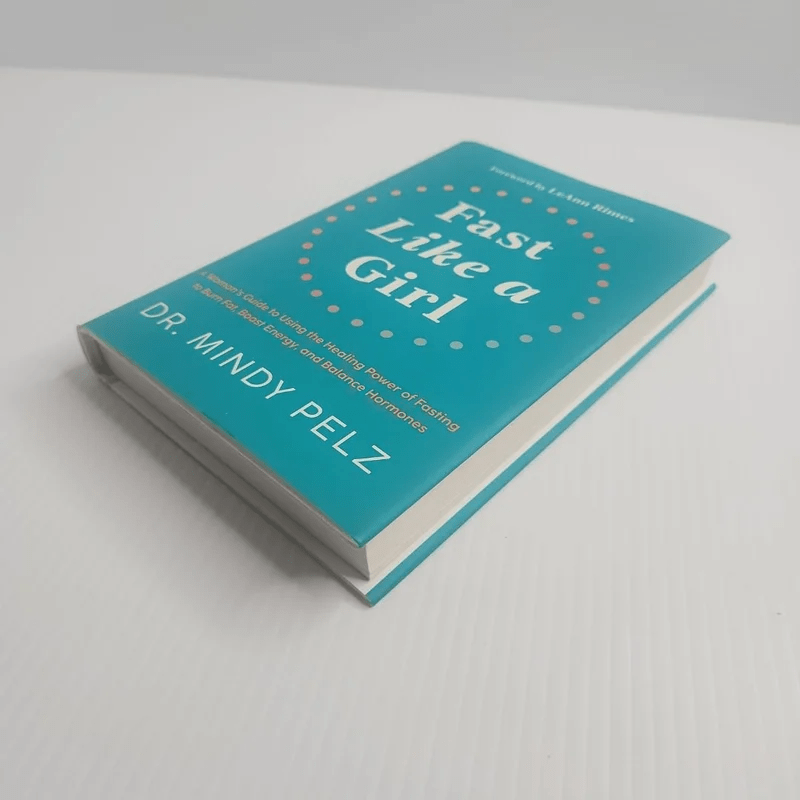
Why am I reading “Fast like a girl” by Dr. Mindy Perlz?
This is my 100th attempt at finding answers to my hormone imbalances, mood swings, irregular periods, and diagnosed PCOS (okay, maybe not 100th but SERIOUSLY!!). I was inspired to read this book from a podcast (The Pursuit of Wellness by Mari Lewellyn) that dives into the topic of women’s health, featuring Dr. Mindy Pelz.
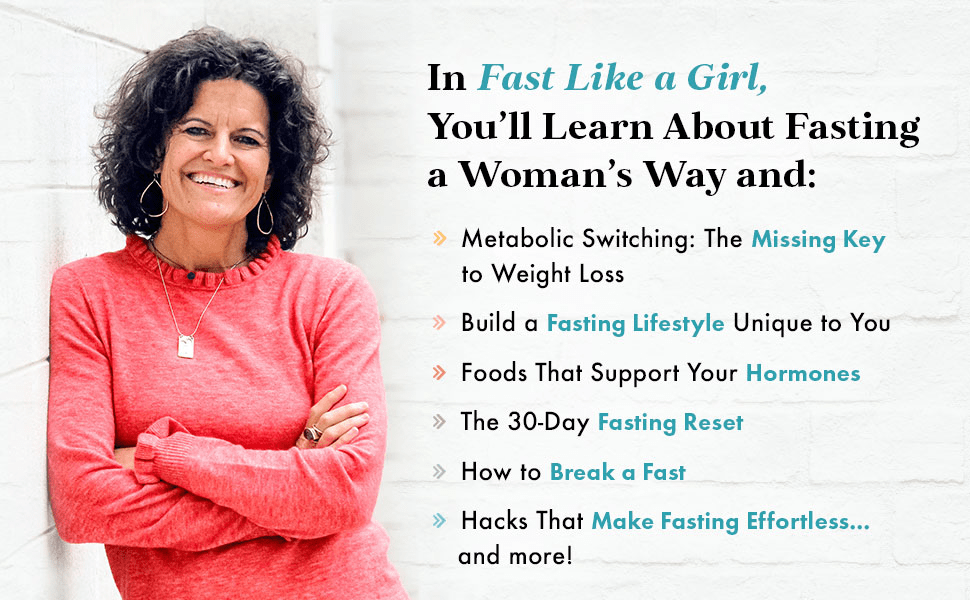
I’m here to tell you that you, along with many women, face neglect when it comes to our health.
For many years, I struggled with irregular periods, painful cramps, raging PMS, depression, anxiety, excessive hair growth, and painful acne, along with many other symptoms. I booked appt after appt with my doctor just to be turned away and told nothing was inherently wrong with me, and that I was self-diagnosing incorrect information.
After passing 2 more years with these erratic symptoms, I finally decided that I would demand blood work and demand more factual answers to tell me otherwise.
That was when my blood work showed the answers I had been looking for. Raised DHEA hormones, raised testosterone, leading me to finally conclude my thesis of struggling with a cycle that was in fact NOT normal.
I also had to do an external and internal ultrasound of my uterus and ovaries, “just to be sure” and confirm it. Of course, found answers there as well.
And finally, after years of educating myself, understanding my body better, tracking my cycles, researching, and advocating for what I felt was going on in my body, I got a call from my Doctor confirming what I knew all along.
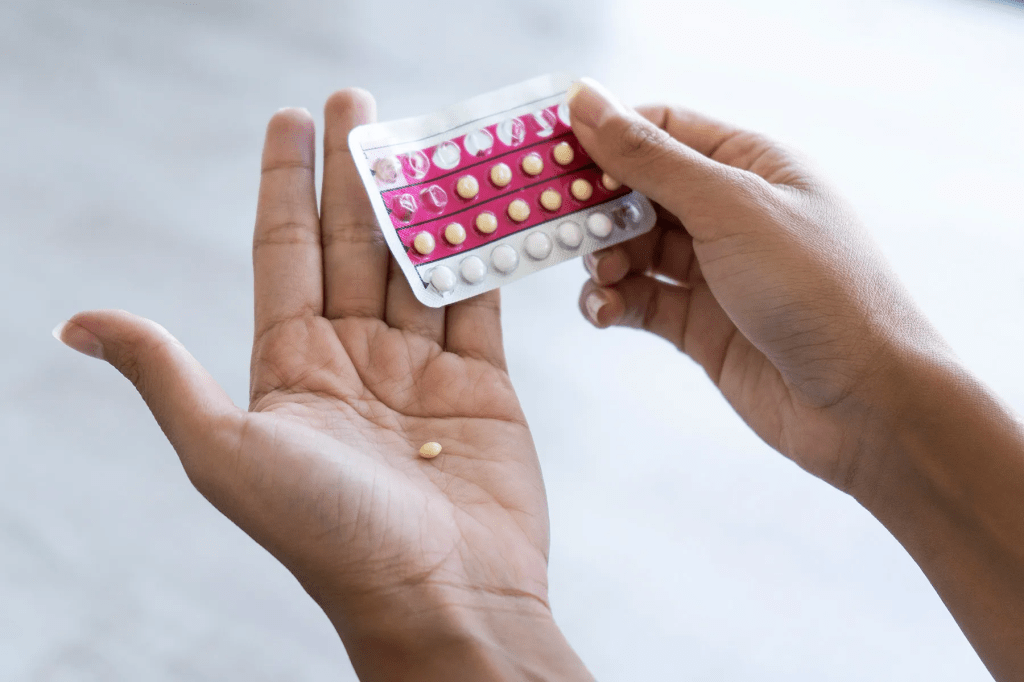
I was recommended to speak to a specialist regarding the next steps for what I should do. I booked an appt with a Gynecologist. I waited 4 months. And when I finally got to this appt, the conclusion to my symptoms was to band-aid it with birth control.
Sigh.
I fear that what I expected would happen from this appointment came true. Many questions got dismissed, and when I asked what I could eat, how I could exercise, and how I could prevent infertility, I was provided with nothing.
I asked, “What steps could I take now to prevent infertility?”, and she responded with “That would be a question to revisit for when you are ready to have kids”.
I do think there are good doctors out there who cater better to their patients’ needs, but I have to say I was deeply disappointed this time. When I was a teenager with little to no information, I followed those instructions, and I did take birth control for 2 years, and I had to get off it because I was becoming severely depressed, gaining weight, and developing worse acne. Then they recommended that I should try an IUD… That was even worse. I removed my IUD after a year, and lost my period for 8 months.
Looking back, if I knew what I do now, I wouldn’t have tried either one. Sure, I want to have a regular cycle and experience, bleed less, have less acne, oh, and let’s not forget getting pregnant… But I would argue that it is a terrible way of sweeping your health under a rug to “deal with it later”.
And listen, I do want to preface this by saying that this is my own personal experience with using contraceptives, and it actually turns out to work great for some women… But it’s also usually the woman who doesn’t face a lot of crazy symptoms that can adjust easily to these synthetic hormones, vs. someone who already has a lot of problems, doesn’t always share the same “good experience” on birth control and other contraceptives. In my opinion, this is taking their attention away from what your body might be trying to tell you.
I believe our body reacts for a REASON, and we should learn to listen to that and practice functional medicine. Instead of “fixing the problem” with a pill, we should better understand why there is a problem there in the first place. It is finding the root of the problem and living a better quality of life because of it!
And that is why I’m very excited to read this book and try it for myself, while also sharing the “Sparknotes” version of the book so you can try it too.
If you are seeking answers to the questions your traditional doctor won’t help you with, I hope this recap helps you understand your body better as a woman and the changes we can make to live a balanced life. 🙂
Introduction
Poor metabolic health is not just a number on the scale; it is a person in crisis. We are all facing metabolic stress together, and even though we live in a world that tells us to treat our poor health with medication, there is another path you have not tried yet: fasting. Fasting is not a one-size-fits-all. You need to tailor it to your specific needs! Tons of scientific proof display the healing done just by choosing what time you decide to eat. Anyone can do it; it doesn’t rob you of your time or of your money. A simple action you can take today to improve your health for the better. This will teach you the power of food, and improve metabolic health… weight loss, healthier hormones, healthy gut, etc….
PART 1: It’s not your fault.
In this chapter, I will walk you through the five ways in which diet has led you down the wrong path. It’s called “The failed five”.
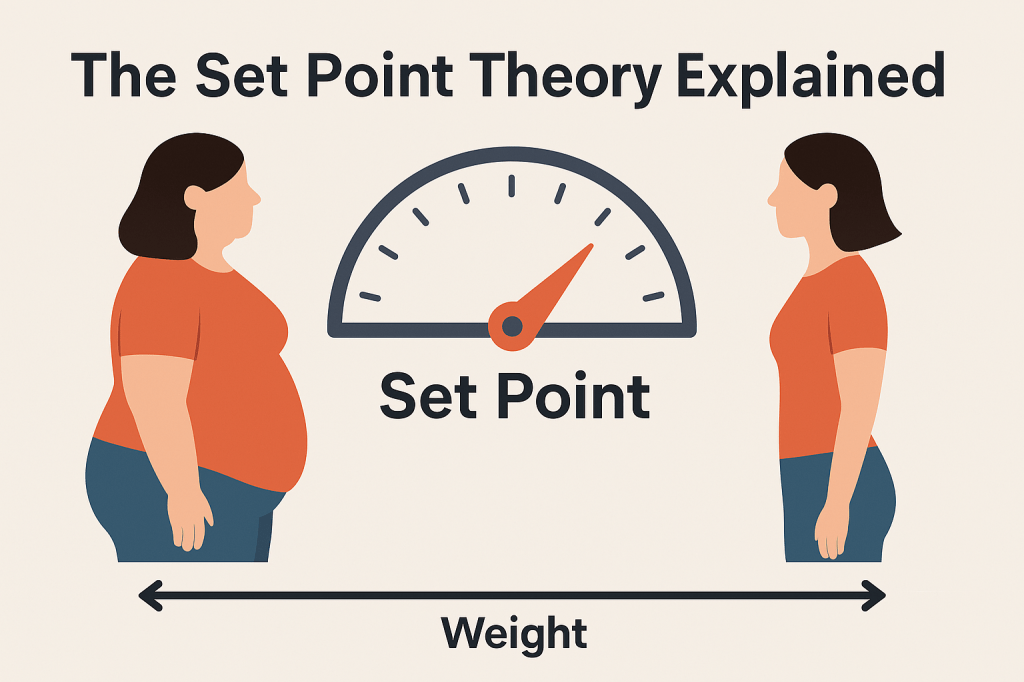
1. Calorie-Restriction Diets – When you eat less and exercise more, your body lowers its metabolic set point. Your “set point” is your body’s ability to maintain its body weight within a certain range of calories. So when you decide to go back to your regular diet after achieving your ideal body weight or close to it, your body puts the weight back on easily because now you are above your body’s set point threshold.
2. Poor Food-Quality Choices – 40 years ago, there was an outcry about obesity, and everyone declared to remove fat from their diet. This is when everyone wanted to eat “fat-free,” leaving the food industry to figure out a new way to make food taste good. This is when the food industry replaced fat with sugar and flavour-enhancing chemicals in its products (which caused obesity rates to skyrocket). I always say, if you can’t pronounce what is on the back of a nutrition label, you probably shouldn’t be consuming it. Generally speaking, when a food label contains more than 5 ingredients, it starts to be considered a highly processed food. Why does this cause you to gain weight? Because highly processed foods make you insulin resistant.
Insulin resistance is a condition in which your cells can no longer successfully use insulin as a hormone to escort sugar from your food into your cells. When your cells can’t use sugar (aka glucose, aka your body’s source of energy), your energy plummets, and all the glucose that wasn’t used for energy gets stored as fat. This is the root cause of metabolic syndrome.
How does insulin work?
Insulin is a sugar-storing hormone.
Easy Analogy: It’s like trying to get into a club, but needing proof of ID first. You’re not legit until you can prove who you are. Glucose is trying to get into the club. Insulin is your proof of ID. The cell is the club. So if glucose doesn’t have insulin to escort it into the cell, this sugar goes into fat storage.
Your pancreas is responsible for releasing this hormone (insulin) after you eat to escort the sugar to its home (your cells). The more sugar-dense the meal is, the more insulin that gets released from your pancreas to maintain your sugar levels. The problem is, if you are continuously eating highly processed foods, insulin begins to spread around your cells.
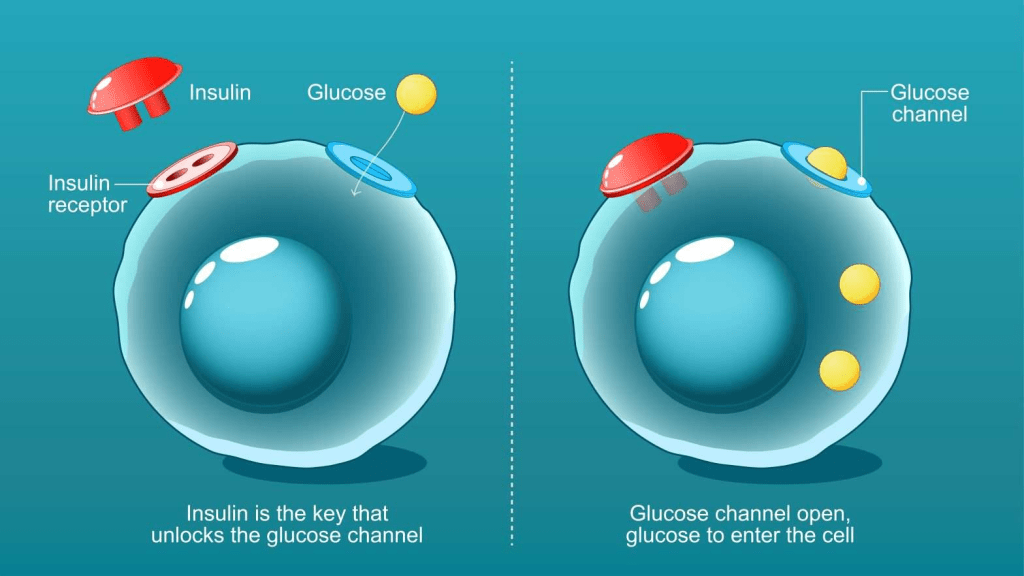
Your cells have Receptor sites that allow insulin to enter. Picture a cell’s receptor site like the entrance to a building. And then picture a swarm of people all trying to run into a store on black friday. Your cell is the building, and that swarm of people is the insulin hormone trying to escort all this “homeless sugar” to your cells. And unfortunately, this is the moment when the entrance becomes jammed.
No sugar gets to your cell. That’s what happens when poor food-quality choices become somebody’s “short-cut” to losing weight. It doesn’t work.
3. Spiking cortisol surges –
When cortisol (your stress hormone) goes up, so does your insulin. Rigid diets that strain your body will keep your cortisol levels higher than normal too. When you are overexercising, cutting calories, and demanding change from your body without giving it time to adjust, your body will respond by releasing cortisol. During the body’s fight-or-flight response, our brain cannot tell the difference between a rigid diet and a tiger chasing us.
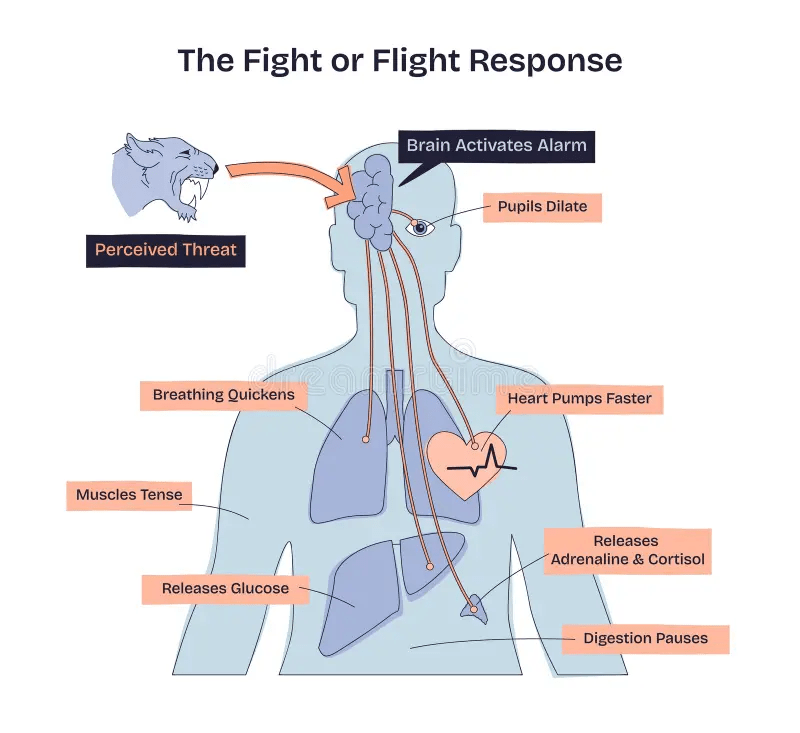
When cortisol is released in the body, it slows down digestion, halting fat-burning and most importantly raising your glucose hormones so that you are physiologically prepared to run away from danger.
Another important factor: the woman’s body is more sensitive to hormone fluctuations than men because we were designed to procreate. When cortisol spikes (due to chronic stress) and sex hormones like estrogen and progesterone decline, it can significantly make it harder for a woman to conceive!!
Furthermore, as our previous note mentions, anytime glucose is raised in the body, insulin gets released from the pancreas to escort our sugar back to cells. But because so much insulin has been released, it overwhelms your cells. The insulin receptors don’t detect insulin, the cell remains a gatekeeper to the glucose trying to get in, and your body stores the sugar as fat instead.
Once this occurs, it doesn’t matter how great your diet is, how many hours you spend at the gym, or what detox plan you follow. Your health will suffer. Many diets don’t address the elephant in the room: getting your cortisol in check!
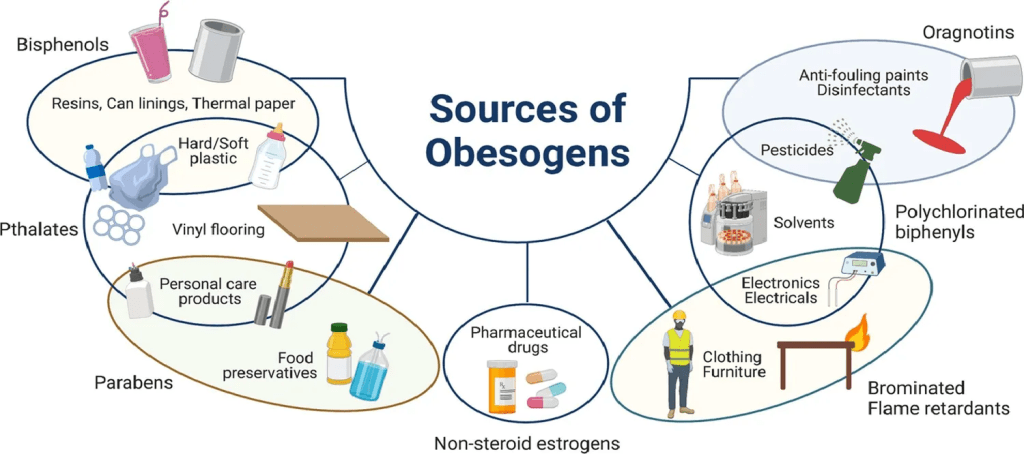
4. Exposure to Toxic Ingredients – When your body consumes toxic ingredients, it doesn’t know what to do with them, so they get stored as fat. So much so that there is a specific category of toxic ingredients literally called “obesogens”. This is your body’s way of protecting all of your important organs when they don’t recognize what is being digested.
The worst 5 chemicals that are considered obesogens are BPA plastics, phthalates, atrazine, organotins, and perfluorooctanoic acid (PFOA). These chemicals can be found in our food, beauty products, cleaning products, cookware, and even in our clothing…
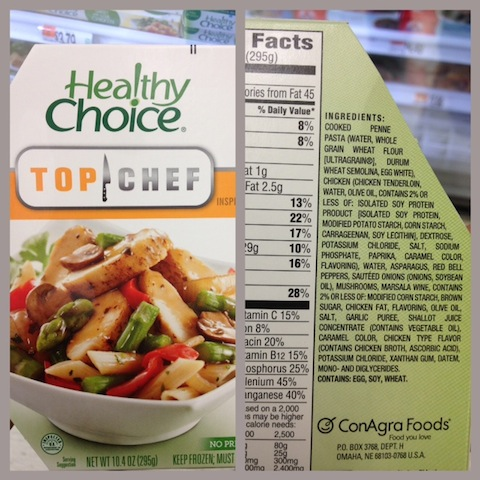
Common obesogens found in food include monosodium glutamate and soy protein isolates. Both are commonly found in weight loss shakes.
The most important note here is that these toxic ingredients are also a problem for your hormones. They block hormonal receptor sites, making it impossible for your hormones to enter your cells and do their job. This can blunt everything from thyroid hormones to insulin from entering your cells, leading to weight gain, fatigue, and erratic mental health!
Detoxing these chemicals from your body can be the answer to a variety of health challenges: weight-loss resistance, thyroid problems, and autoimmune conditions.
*Chapter 6, I will share the list of ingredients to avoid, because those top 5 only scratch the surface*
5. One-Size-Fits-All Approach– You are your own unique person. Therefore, what diet might have worked for your friend won’t necessarily work for you. (Chapter 6 will explain how your sex hormones have different food requirements. For example, estrogen loves a low-carbohydrate diet, while progesterone wants you to keep your carbohydrate load a little higher.
Particularly for women, it is so important to find a better relationship with food, and one that is built on adapting our diet to our menstrual cycle.
Never doubt what your body is capable of, because every bodily system works intricately together to keep you alive. Your body is working for you, not against you, even though it can feel like that sometimes. Our bodies were designed to self-heal.
Combining your fasting and food choices with your hormones can unlock a new level of health and well-being.

 Mental wellness collective
Leave a comment