Build a plan that reflects your needs.
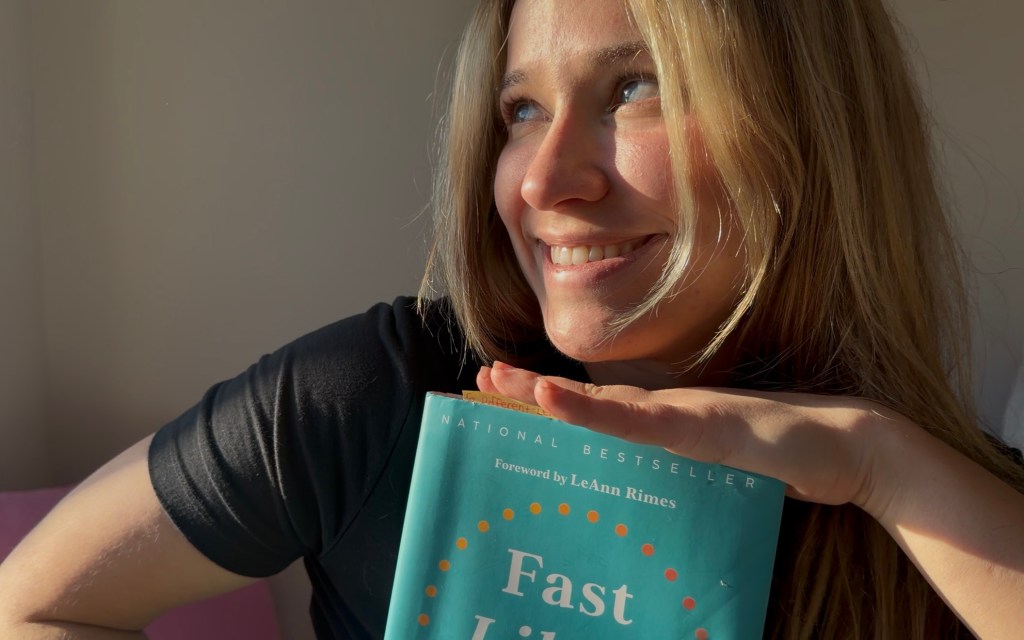
My biggest takeaway from Chapter 5 was that every single fasting diet must be unique to you! Every person has a different goal in mind, support system, lifestyle, dieting restrictions, activity level, and so on. The worst mistake people make when starting any diet is copying what someone else did. Cookie-cutter diets aren’t going to fulfill the needs of your health, especially as a woman.

Now, before building a fasting diet, you need to identify what you’re trying to achieve. Are you trying to lose weight? Balance your hormones? Improve a health condition? Make sure you know exactly what you are trying to accomplish by building this fasting lifestyle.
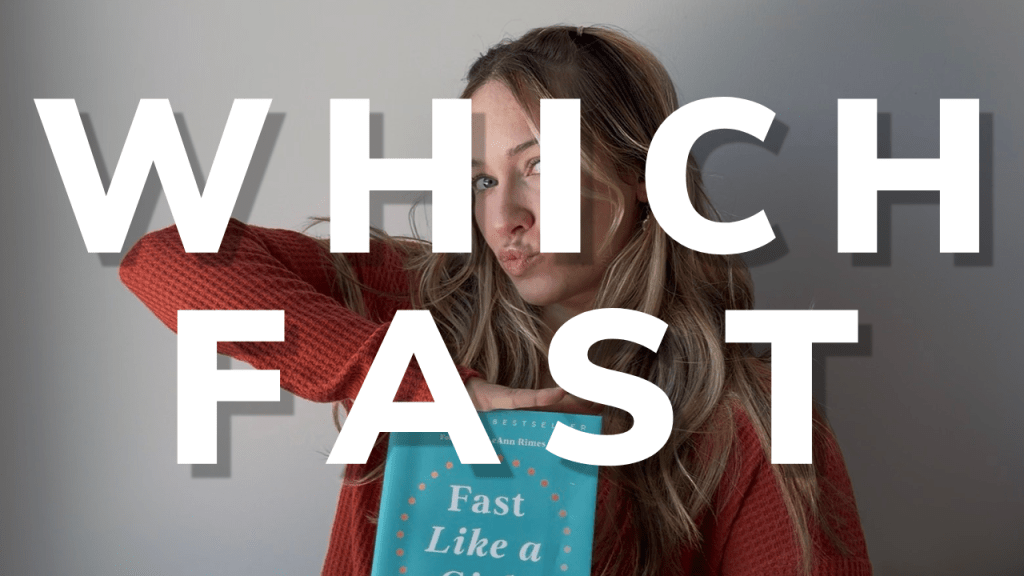
It’s also important to include variability. As discussed in Dr. Mindy Pelz’s book, she mentioned 6 different fast LENGTHS. That said, you want to pick a fast that reflects your health goal, while also throwing in a few different ones every once in a while for variability. Your body is always fighting to stay in homeostasis (a balanced state), and over time, your body will get used to it. If you work out 2x a week using the same weight, your muscles adapt, and eventually you hit something called a plateau. This is really important to avoid during your fasting journey.
Something we know all too well is a diet that provides instant results, but not lasting ones. You start a ketogenic diet for 3 months, lose 20 lbs, and when you decide to go back to your regular routine, you gain it all back. Or you begin to fast and start to see the scale decrease… but as your body is learning this new routine and lifestyle, it is adapting. Eventually, you plateau. You start questioning what’s slowing down the process. You haven’t changed anything you’re doing, so why the sudden halt?
You’re just missing what I like to call “the element of surprise”. For example, if your fasting diet consists of eating between 11am and 7pm, you’re teaching your body to adapt to a fast of 15 hours every day. Eventually, your body will adapt and plateau. It’s your responsibility to throw in a different type of fast in the midst of all that. Your main focus could be obtaining a 15-hour fast every day, while also including a 24-hour fast sprinkled somewhere in there. Or even a 17-hour fast, or a 3-day water fast! The options are limitless, and they are yours to make. Design a fasting lifestyle that resonates with you.
Just be careful that when you are choosing to extend your fast, and sprinkle the “element of surprise” that you do it when you are on Day 1-10 of your cycle, and when you are post-ovulation. These are the best times to apply a bit more stress to your body.

The rule of variability also applies to the food you eat. It is very common that you see people eating the same 20 grocery items for years without ever changing things up. It’s important to continue giving your body variety in the fruits, veggies, meats, and foods that you consume!
Lastly, surround yourself with a good community. Take this as your inspiration to start a group chat and invite like-minded women to join you on this journey. Especially if you feel like you aren’t getting the support you need from the people closest to you (which is problematic, btw), you must get community elsewhere.
Conclusion-
Don’t fast like a man. And don’t compare yourself to a man. What do I mean by that? Well, if you start a weight loss journey with your male partner, don’t expect to lose as much weight as him because he will make it look effortless. Instead, I encourage you to find a community of woman, that are moving at your pace, and can share similar experiences and struggles. Figure out what your goal is, change the length of your fast every once in a while for variability, bring variety into your diet, and surround yourself with a good community.
Consider your lifestyle: Is your partner supportive of your goals? What makes the most sense with YOUR schedule? How active are you?
Estrogen loves low-carb diets, progesterone loves high-carb diets. Fast when your hormones are at their lowest (Day 1-10, and post-ovulation), avoid fasting more than 15 hours during ovulation, AND avoid fasting completely the week before your period, and during.
Finally, don’t give up on your goals; sometimes results can take as long as 90 days! Stay consistent, and you will see results. 🙂



Leave a Reply